


Use calculator nowRead the guide ↓
California Title 24 Solar Mandate Calculator
Calculate your required CA Title 24 solar + battery size by climate zone & sq. footage. Free calculator, updated for the 2025/2026 code cycle.
Your new dwelling
Enter your ZIP or tap the map to find your zone
Minimum required PV
The formula & the fine print
required kW = (floor area × A) ÷ 1,000 + (units × B)- A and B are your climate zone's factors from CEC Table 150.1-C (2025 code cycle, effective Jan 1, 2026).
- Storage option: ≥7.5 kWh of JA12 battery per dwelling reduces required PV by 25%.
- Exemption: below 1.8 kW single-family / 4 kW low-rise multifamily, no PV is required.
- The code also caps the requirement at what your solar-suitable roof area (SARA) can physically hold — a consultant documents that on the compliance report.
Covers single-family & low-rise multifamily (≤3 stories). High-rise multifamily and commercial fall under separate 2025-cycle provisions.
Planning estimate only. Your official Title 24 / CF1R compliance number comes from a licensed energy consultant.
Is Solar Required on New Homes in California?
Yes. Since January 1, 2020, California's Building Energy Efficiency Standards — Title 24, Part 6 of the California Code of Regulations, adopted by the California Energy Commission (CEC) and enforced by local building departments — have required most new low-rise residential buildings to include a solar photovoltaic system. The required size depends on the home's climate zone, conditioned floor area, and number of dwelling units. Since then, the CEC's three-year update cycles have carried the mandate well beyond single-family homes: high-rise multifamily and many nonresidential buildings now have solar and battery-storage requirements of their own. The standards in force today are the 2025 code cycle, effective January 1, 2026.
The calculator on this page gives you the number that whole process starts from: your home's minimum required PV size in kilowatts, with and without battery storage.
Have your required kW? Let's design the system around it.The mandate tells you the minimum size — our design technicians turn that number into a complete, permit-ready system built for your roof. (Just after a ballpark price? Our solar cost estimator is the quicker tool, and if you landed here looking for general California solar pricing on an existing home, that's the one you actually want.)Get your system designed →How to Use This Calculator
This calculator provides a basic estimate for research and initial planning purposes — your Title 24 consultant or energy modeler produces the final compliance documentation.
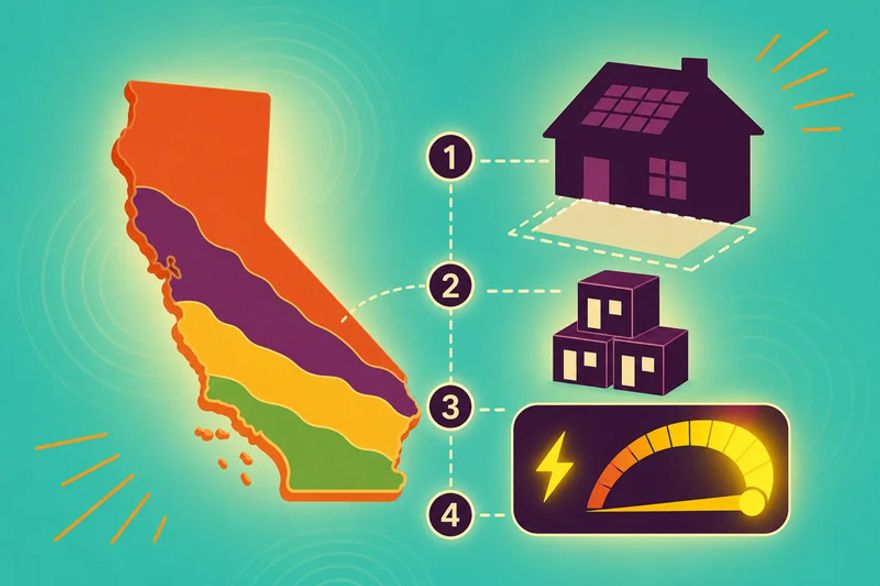
- Select your climate zoneCalifornia is divided into 16 CEC climate zones, and each has its own sizing factors. Unsure which zone you're in? Look it up by zip code.
- Enter your conditioned floor areaTotal square footage of conditioned (heated/cooled) space for the new dwelling — garages and unconditioned areas don't count.
- Enter the number of dwelling units1 for a single-family home, 2 for a duplex, and so on. The dwelling-unit factor changes the result, so a triplex sizes differently than one big house.
- Read your resultsYou'll get two numbers: the minimum system size in kW, and the smaller minimum you'd qualify for by adding battery storage.
New to solar entirely? Our Getting Started Guide walks you through how a system's pieces fit together before you start pricing anything.
2025 Code Update: What's In Effect for 2026
The solar mandate is not a one-time 2020 rule — the CEC updates the Title 24 energy code roughly every three years, and each cycle has widened its reach.
The 2025 cycle, in force since January 1, 2026, keeps the residential sizing method this calculator uses and extends solar and battery-storage requirements across more nonresidential and high-rise multifamily project types. If you're building a standard low-rise home, duplex, or townhome, the formula below is still your formula — but if your project is multifamily high-rise or commercial, it falls under separate provisions this calculator doesn't cover.
How Your Required System Size Is Calculated
Title 24 sizes your PV system with one equation, driven by two climate-zone factors the CEC publishes in Table 150.1-C:
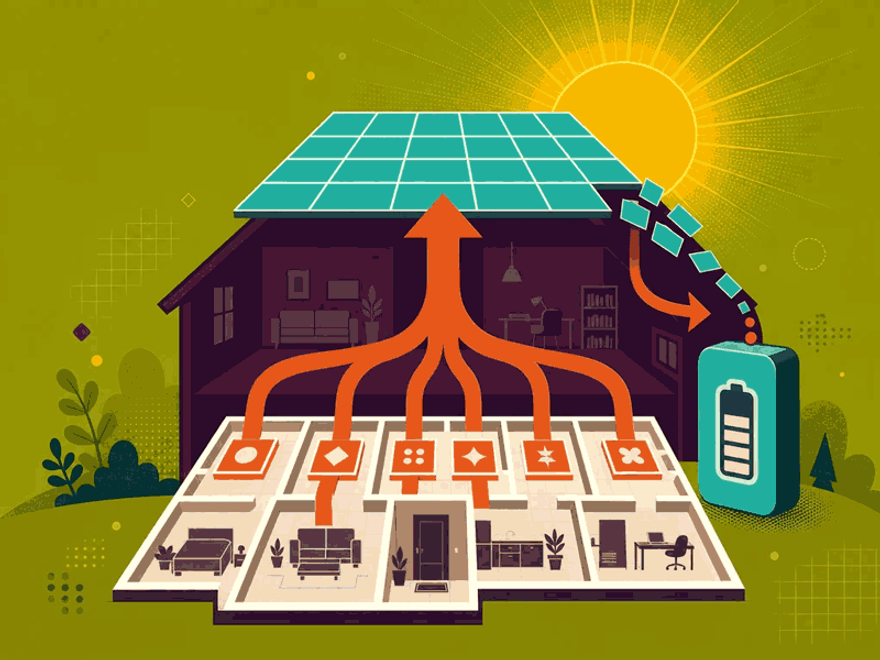
That's the math this calculator runs. Three governing rules sit on top of it:
| Rule | The number | What it means for your build |
|---|---|---|
| Minimum-size exemption | 1.8 kW single-family / 4 kW low-rise multifamily | If the formula returns less than this floor, the dwelling is exempt from the solar requirement. The 2025 cycle sets a higher 4 kW floor for low-rise multifamily (§170.2(f)) than the 1.8 kWdc single-family floor. |
| Battery-storage reduction | 25% smaller PV | Pair the system with qualifying battery storage and your required PV size drops by a quarter. |
| Minimum storage capacity | 7.5 kWh per dwelling | To claim the 25% reduction, the battery must be at least 7.5 kWh and meet the code's JA12 requirements. |
The code also allows a reduced system where roof space or shading genuinely limits the array — your energy consultant documents that on the compliance report, so a tight urban lot or a heavily treed site isn't forced into an impossible install.
Battery Storage and the 25% Size Reduction
Here's the part most searchers get wrong: for a typical new low-rise single-family home, Title 24 does not require a battery. Storage is a compliance option the code rewards — install at least 7.5 kWh of JA12-compliant battery storage and your required solar array shrinks by 25%. The 2025 cycle also adds battery-ready wiring and space provisions for some multifamily and nonresidential projects, which is preparation for storage rather than a requirement to install it.
Whether the trade is worth it comes down to more than compliance math. Under California's current net-billing rules, solar exported to the grid earns far less than it once did, so storing your afternoon surplus and using it in the evening is where the economics have moved — a battery that shrinks your required array often pays its way in avoided evening rates and outage backup on top of the code benefit.
If you're weighing how much storage makes sense beyond the 7.5 kWh code minimum, our battery bank sizing calculator sizes a bank from your actual daily loads rather than the code floor.
EPBB vs. Title 24: Why This Isn't an EPBB Calculator
If you arrived here searching for EPBB software sizing guidelines, you're looking for a tool that retired with its program. EPBB — Expected Performance-Based Buydown — was the sizing and incentive method behind the California Solar Initiative (CSI) rebate program, and CSI stopped accepting new applications in 2016. There is no current EPBB calculation to run for a new home.
Today's new-construction solar requirement works differently: Title 24 sizes your system with the conditioned-floor-area and dwelling-unit formula above, based on your climate zone — no rebate application, no buydown estimate. If you're hunting for a "California solar rebate calculator," treat decade-old CSI-era tools as history; current incentives run through your utility and federal tax policy and change often enough that you should check the live programs directly rather than a legacy calculator. (EPBB's cousin, the CEC-AC rating, does still appear on interconnection paperwork — see the FAQ below.)
Get a Design Built Around Your Actual Roof
This calculator gives you the code-minimum number. A real design goes further: it maps irradiance, shading, and roof angle to place panels where they'll actually perform, and it accounts for the fire and ridge setbacks your jurisdiction requires — the reason people spec a roof full of panels and then get a permit rejection for space they can't legally use.
The low-pressure path: see what a complete kit sized to your number would cost first, then talk to a solar design technician only if it fits your budget and goals. Unbound has spent 20 years equipping DIYers and professional installers with professional-grade equipment done right — you're not figuring this out alone.
Get a Design Built Around Your Actual RoofTurn your Title 24 minimum into a complete, permit-ready system — panels, inverter, racking, and engineering support included.Get your system designed →Questions people actually ask
Straight answers, sourced from real searches.
Yes. Since January 1, 2020, California's Title 24, Part 6 Building Energy Efficiency Standards — adopted by the California Energy Commission (CEC) and enforced by local building departments under the California Building Standards Commission — have required most new low-rise residential buildings to include a solar PV system sized to the home's climate zone and floor area. The 2025 code cycle, effective January 1, 2026, expanded the requirement to more nonresidential and high-rise multifamily projects.
It depends on your climate zone, conditioned floor area, and number of dwelling units — enter those three into the calculator above for your exact required kW. Under Title 24, typical new-construction systems range from about 2.5 kW in mild coastal climate zones to 5 kW or more in hot inland zones.
For most new low-rise single-family homes, Title 24 doesn't flatly require a battery — it's optional but incentivized: pairing your system with at least 7.5 kWh of JA12-compliant battery storage lets you reduce your required solar PV size by 25%. The 2025 code cycle also adds battery-ready wiring and space requirements for some multifamily and nonresidential projects, even where installing a battery itself isn't yet mandatory.
No. EPBB (Expected Performance-Based Buydown) was the sizing and incentive method used by the California Solar Initiative (CSI) rebate program, which stopped accepting new applications in 2016. Today's Title 24 new-construction solar mandate uses a different method — the conditioned-floor-area (CFA) and dwelling-unit formula this calculator runs — not EPBB.
A CEC-AC rating is the California Energy Commission's standardized method for rating a solar module or inverter's real-world AC power output. It was originally developed for CSI/EPBB rebate calculations and is still referenced on utility interconnection paperwork. It's a component rating, not a system-sizing requirement, so it doesn't change the kW number this calculator gives you.
Yes. For a single-family home, if the CFA/dwelling-unit formula calculates a required system smaller than 1.8 kWdc, that dwelling is exempt from the Title 24 solar requirement entirely. The 2025 code cycle sets a higher exemption floor for low-rise multifamily: under Section 170.2(f), a low-rise multifamily project is exempt when its calculated minimum PV size is below 4 kW.
Yes, within its low-rise scope — the 'Number of Units' field applies the dwelling-unit factor from CEC Table 150.1-C, so a duplex or triplex sizes differently than a single-family home. High-rise multifamily and nonresidential projects fall under separate 2025-cycle formulas this calculator doesn't cover.
Independent Title 24/CF1R energy compliance reports typically run about $195–$395 depending on project size and complexity. Unbound Solar doesn't produce that report — your architect, builder, or Title 24 consultant does — but the PV size from this calculator is exactly the number that report will need.
Your Title 24/CF1R compliance report, including your required solar and battery sizing, is submitted by your architect, builder, or Title 24 consultant along with your building permit application to your local building department. See our DIY solar permitting guide for what happens next on the installation side.