
California solar policy
California Solar Property Tax Exclusion: What the 2027 Deadline Means for Your Project
California's property tax break for new solar systems is scheduled to stop covering new installs after 2026. This guide explains what that changes, what it is really worth, and what matters more for California homeowners thinking about installing solar.
What California's Solar Property Tax Exclusion Does
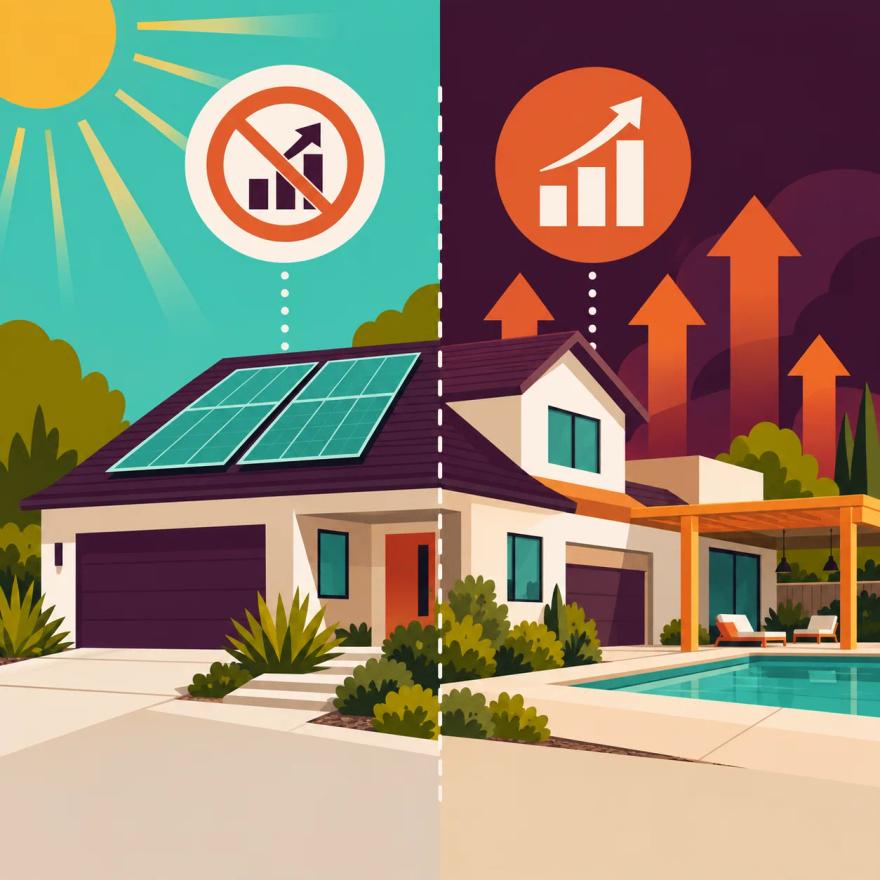
California's solar property tax exclusion keeps a qualifying solar energy system from raising a home's assessed value. Under Section 73 of the California Revenue and Taxation Code, adding an active solar energy system is not treated as taxable new construction, so the county assessor does not add the system's value to the property tax bill.
That matters because most home improvements work the other way. A room addition, a pool or a garage normally adds value that the assessor taxes. Section 73 carves solar out of that rule.
The Deadline: What "Completed Before 2027" Means
Homeowners who finish in time keep the benefit. California's SB 710 protects solar owners who qualify for the exclusion before January 1, 2027, keeping the exclusion in place until the property changes ownership.
What counts as "completed" for your specific system is a question for your county assessor. Final inspection, utility permission to operate and assessor records can land on different dates, so confirm locally rather than assuming.
| Your situation | Property tax treatment under current law |
|---|---|
| Solar completed before January 1, 2027 | Excluded until a change in ownership (SB 710) |
| Under construction during 2026, completed before January 1, 2027 | Excluded (BOE guidance) |
| Started in 2026, completed after December 31, 2026 | Not excluded (BOE letter to assessors) |
| Started in 2027 or later | Not excluded unless the Legislature extends Section 73 |
What the Exclusion Is Actually Worth
For an average-sized California home system, losing the exclusion likely means a few hundred dollars a year in added property tax, not thousands.
The California Assembly Revenue and Taxation Committee's April 2026 analysis of AB 2389 estimated the stakes using EnergySage pricing. That analysis put the cost of a 9.13 kW system, the average size in California, at under $23,000, and applying the 1% property tax rate produces an added annual tax of less than $230.
That figure recurs every year the system is assessed, so it is a real cost. The Assembly committee's estimate is also a simplification: your assessor sets the actual added value, and your system size and price may differ. Treat the number as a sense of scale, not a quote.
What Most People Get Wrong About This Deadline
The most common mistake is treating the California exclusion deadline as the reason to buy solar, or the reason to give up on it. The deadline changes a modest annual tax line. It does not change the two numbers that drive solar economics: what you pay for electricity and what you pay to install.
The pattern is familiar. The federal residential solar credit under §25D is already gone: the IRS states the credit is not available for any property placed in service after December 31, 2025, and an expenditure counts when installation is completed. Homeowners who rushed to beat that date learned that "paid for" and "completed" are different things.
The same logic applies to California's Section 73. A rushed design that fails inspection, needs a plan revision or has mismatched parts costs more than a few hundred dollars a year in property tax.
- What To Do InsteadSize and design the system around your real usage and roof, then see whether the timeline fits the deadline. If it fits, good. If it does not, the project should still stand on its own economics.
- Use Our Free Estimator ToolGet a personalized estimate for a professional-grade self-install solar panel kit.Get Your Estimate
Why Electricity Prices Matter More Than the Tax Break
Rising electricity prices are the durable reason homeowners look at solar, now that the federal credit has expired and California's property tax exclusion is sunsetting. The U.S. Energy Information Administration's Short-Term Energy Outlook (September 2026) projects the average residential price at 18.2 cents per kWh in 2026 and 18.6 cents in 2027, up from 16.5 cents in 2024.
- National averages hide sharp local moves.EIA's September 2026 outlook shows residential prices up 36% in a year in Maine and 18% in Connecticut. Your own bill is the number that matters, so check the per-kWh rate on your latest statement.
- A practical rule of thumb:Homeowners paying 20 cents per kWh or more have the most to gain from producing their own power, because every kilowatt-hour a solar system replaces is worth more.
Watch what is coming, too. Utilities in some regions are planning for large new loads, including data centers, and grid upgrades have to be paid for. How those costs reach residential customers is decided in rate cases, so it is worth following your utility's filings rather than assuming today's rate will hold.
Can a New Project Still Finish Before 2027?
Whether a new California solar project can be completed before January 1, 2027, depends on your local permit office and your utility, not only on how fast you can install. Some projects starting in fall 2026 may make it; others will not. Plan around a correct design first and treat the deadline as a bonus if the timeline fits.
- Review your usagePull 12 months of electric bills to see what the system has to produce.
- Design the systemSize panels, inverter and racking around your roof, usage and future loads.
- Prepare permit-ready plansPlan sets are drawn for your jurisdiction, with engineering where required.
- Submit permits and utility paperworkYour building department and utility each review the project.
- Install the equipmentYou handle the work you are allowed and able to do; a licensed electrician handles the rest where required.
- Pass inspectionThe inspector confirms the installed system matches the approved plans.
- Receive permission to operateYour utility approves the system to connect and run.
Each review step runs on someone else's calendar. That is the honest reason not to promise a completion date before the design is done and your local offices have responded.
What to Gather Before You Start
- 12 months of electric bills, including your per-kWh rate and your utility's name
- Roof photos and measurements, including any shading from trees or nearby buildings
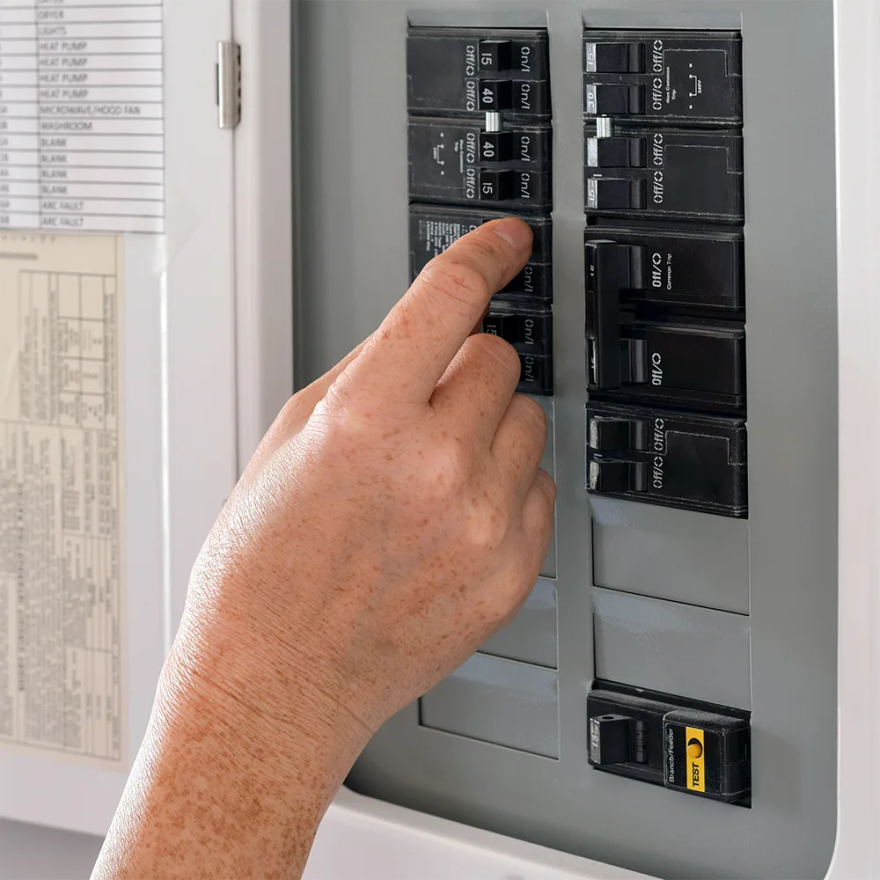
- Photos of your main electrical panel, so the design accounts for how the system will connect
- Planned future loads, such as an EV charger, heat pump or workshop
- Your backup goals, if keeping power on during outages matters to you
Solar Installation Options for Homeowners in California
California homeowners have several ways to approach buying and installing solar, and each trades cost against hands-on involvement.
The right choice depends on your unique situation: your energy goals, your budget, your comfort with hands-on work and how much risk you want to carry on design and approvals.
- Turnkey installation is the right call for homeowners who want every step handled by someone else. The extra cost is paying for sales, overhead and labor you might otherwise handle.
- Buying equipment alone is cheapest on paper and riskiest in practice. Panels are the easy part. A complete system still needs a design, plans an inspector will accept and utility interconnection approval.
- Guided self-installsits between turnkey and 100% DIY: do the parts you can handle, and utilize expert help on the parts that have to be right.
Is Guided Self-Install Right for You?
Guided self-install is a strong fit for California homeowners who are comfortable with tools, measurements and following a plan, and a poor fit for anyone who wants every step handled. Being honest about fit is part of doing this well.
| Good fit if… | May not be the right fit if… |
|---|---|
| You are comfortable with tools, measurements and photos | You do not want any hands-on project work |
| You want to avoid paying for sales overhead and labor you can handle | You prefer one company to own every step |
| You want to follow approved plans and local rules | You want a generic kit without a site-specific design |
How Unbound Solar Helps California Homeowners
Unbound Solar helps capable California homeowners save on installation by empowering them to own the parts they can handle, while the design, permit-ready plans and approval path are handled by people who do this kind of work every single day. You stay in control of the project, but you are never left on your own.
- Designed systemsPanels, inverter and racking sized to your home and built to work together, not a cart full of parts.
- Permit-ready plansPlan sets prepared for your jurisdiction, with stamped engineering where required.
- Utility interconnection supportHelp answering the technical questions your utility asks before approving the system.
- Inspection supportGuidance when an inspector or permit office asks for clarification or a revision.
- Electrician-friendly install tierWith Partial Install Help, you set racking and panels and a licensed electrician handles wiring and tie-in.
The design, plans, permits, engineering and support package is the same whichever install path you choose; only the labor changes. On the reference system in Unbound Solar's own estimator, labor savings run roughly 14% for Partial Install Help to 27% for full self-install, compared with full-service installation. That is labor you skip, not corners you cut, and your number will depend on your system.
Start With a Solar Estimate
The fastest way to see whether solar pencils out for your California home is to start with your own numbers. The Unbound Solar estimator models your actual roof from satellite imagery, including area, orientation and shading, and applies real-world losses that simple rule-of-thumb math leaves out.
Enter your address, electric usage and project goals. From there you can have a report emailed to you or request a detailed proposal, and see what kind of system may fit your home, what equipment it needs and what questions to answer before moving forward. A final design may still need professional review for your local rules.
Questions people actually ask
Straight answers, sourced from real searches.
Not for systems completed before January 1, 2027. California's Section 73 excludes a qualifying solar system's value from reassessment, so the assessor does not add the system to your property tax bill. Systems completed after that date will be assessed like other improvements unless the Legislature extends the exclusion. Confirm details with your county assessor.
California's Section 73 solar exclusion is set to sunset on January 1, 2027. According to Board of Equalization guidance, a solar system must be completed before that date to qualify. When construction started does not matter. A system still under construction on January 1, 2027, does not qualify under current law.
No. Under California's SB 710, signed in October 2025, solar systems that qualified for the Section 73 exclusion before January 1, 2027, stay excluded until the property changes ownership. The 2027 sunset affects new solar construction, not systems already covered. Check with your county assessor if you are unsure your system was recorded as excluded.
Probably a few hundred dollars a year. The California Assembly Revenue and Taxation Committee's April 2026 analysis estimated an average 9.13 kW system at under $23,000, adding less than $230 a year in property tax at the 1% rate. Your assessor sets the actual value, so your figure may differ.
Possibly, but no extension is on track. Assembly Bill 2389 would have extended the exclusion for residential systems of 10 kW or less, but OC Solar reported the bill was held in the Assembly Appropriations Committee in May 2026 and had not passed as of August 2026. Check current status before relying on an extension.
No. The IRS states the 30% residential clean energy credit under Section 25D is not available for property placed in service after December 31, 2025. An expenditure counts when installation is completed, so paying early did not preserve eligibility. Verify any state or utility incentives against a current source before counting on them.
Often yes, with the right plans and help. A guided self-install includes a system design and permit-ready plans for your jurisdiction. Depending on local rules, a licensed electrician may need to handle wiring and the grid tie-in. Requirements vary by city, county and utility, so confirm what your building department allows.
Not by default. Most grid-tied solar systems shut down when the grid goes down unless they are designed with battery or backup equipment. If backup power matters, the system needs to be designed around the loads you want to keep running, battery capacity, inverter behavior and any generator support.