
Getting started with solar
How Many Solar Panels Do You Actually Need? Start With Your Energy Usage
Search "how many solar panels do I need" and you'll get a different answer on every page. That's not because anyone is wrong — it's because the real answer isn't a fixed number. It's a calculation built from your home's actual usage, your location, and the panels you choose.
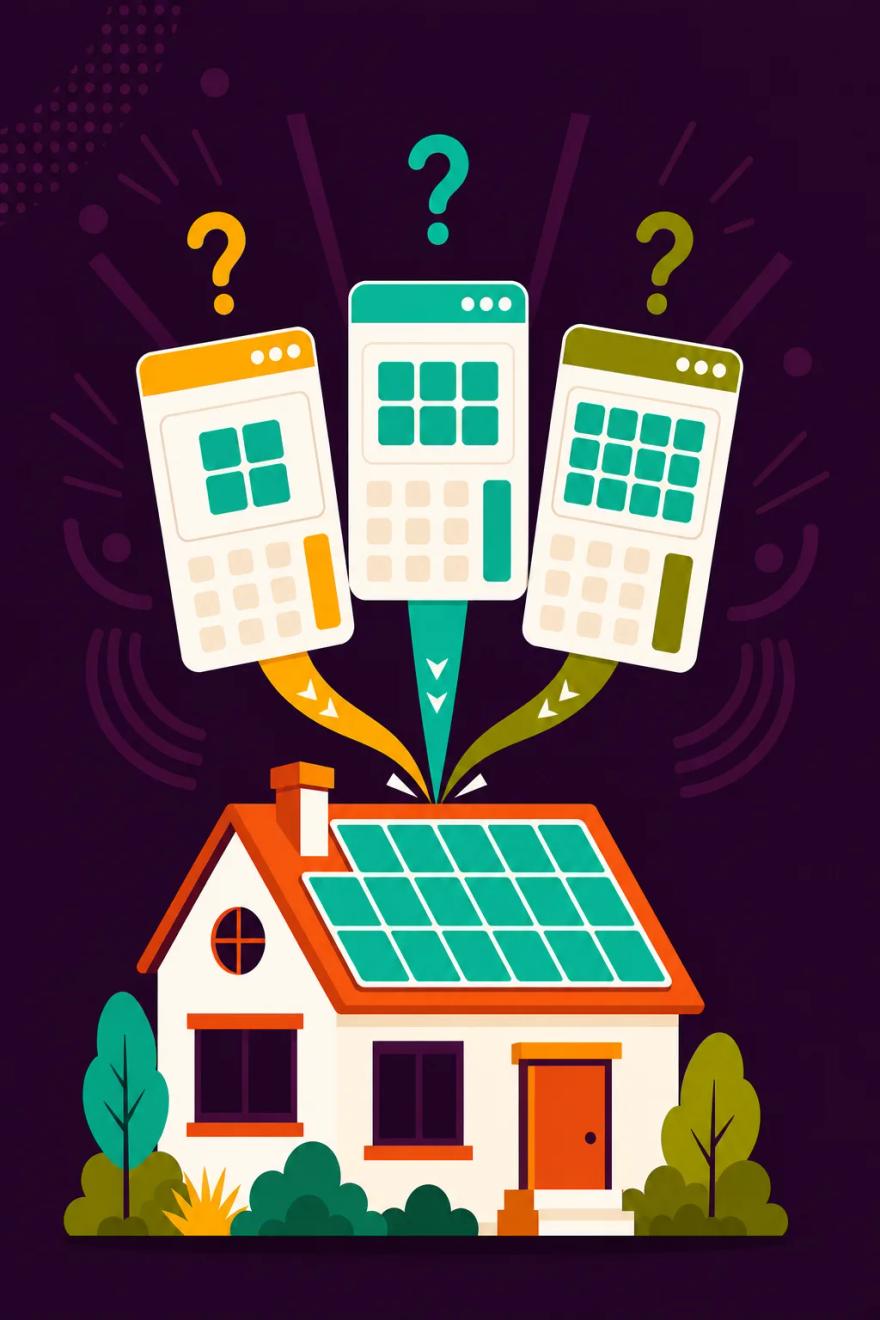
Why Every Solar Panel Calculator Gives You a Different Number
Most people start by searching for a generic panel count. One site says 15, another says 25, a forum post says someone did it with eight.
None of those numbers is lying to you. They're just answering different questions, because they're built on different assumptions about someone else's home.
Your panel count isn't something to look up. It's something to calculate, using your actual electricity usage, your actual location, and the actual panels you choose. Get one of those inputs wrong and you're not off by a little — you're either paying for panels you didn't need, or you're standing on your roof next year wondering why the system can't keep up.
That's the approach we'll walk through here: build your number from the ground up, using your numbers instead of a generic range.
The Three Numbers That Determine Your Panel Count
Sizing a solar system comes down to three inputs, used in order.
- Find your daily usagePull your electric bill and find your monthly usage in kilowatt-hours (kWh), then divide by 30 for your average daily usage. This is the step most people skip — but your neighbor's water heater, AC, and habits aren't yours, so their number won't fit your home.
- Find your peak sun hoursPeak sun hours measure sunlight intensity, not daylight length. A sunny location might average 5 to 6 a day; a cloudier region further north closer to 4. Divide your daily usage by your peak sun hours to get your system size in kilowatts.
- Choose your panel wattageMost residential panels today run 350 to 450 watts, with 400 a common middle ground. Convert your system size to watts and divide by your chosen panel's wattage — that's your panel count.
Worked Example: From a Power Bill to a Panel Count
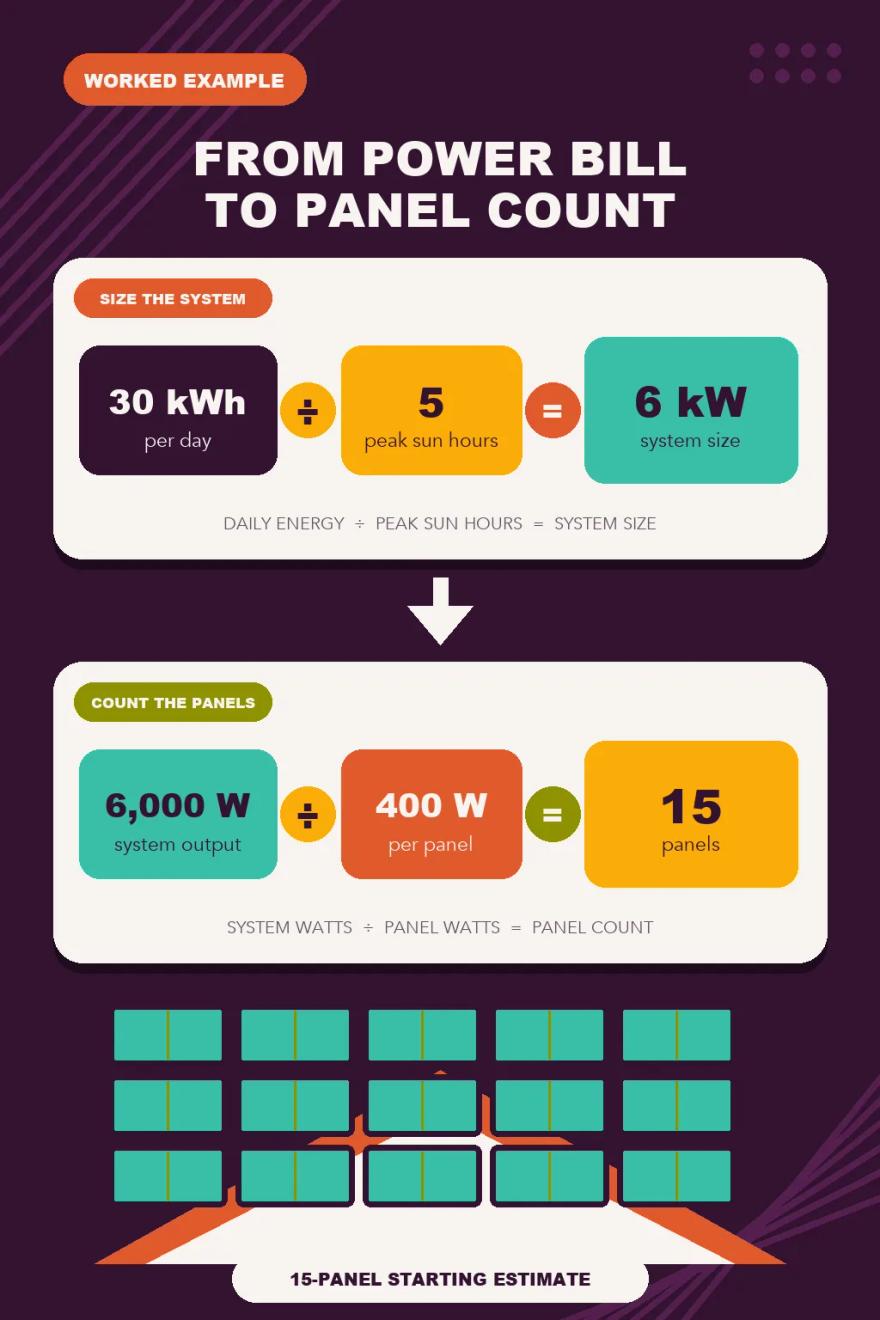
Here's the calculation with real numbers, start to finish. A home uses 30 kWh per day, in a location averaging 5 peak sun hours.
Treat that 15-panel number as a clean starting estimate, not a final one. A real design also builds in losses from heat, wiring, and less-than-perfect sun exposure, so the finished number usually runs higher than the back-of-the-napkin math. That same 30 kWh/day home can land closer to 17 panels once you move to higher-efficiency 440-watt panels and a real roof is modeled for actual area, orientation, and shading. The gap between the quick estimate and the real number is exactly why a proper design — not just a formula — matters.
Usage-to-Panel-Count Table
This table applies the same method at 5 peak sun hours and 400-watt panels, so you can see how the count shifts with usage. Your own location and panel choice will move these numbers.
| Daily usage | System size | Panels (400W, napkin estimate) |
|---|---|---|
| 10 kWh/day | 2 kW | 5 panels |
| 20 kWh/day | 4 kW | 10 panels |
| 30 kWh/day | 6 kW | 15 panels |
| 40 kWh/day | 8 kW | 20 panels |
| 50 kWh/day | 10 kW | 25 panels |
These are napkin-math figures for a single set of assumptions. Your real design will factor in your actual peak sun hours, your roof's usable area and shading, and real-world losses — which is why the final count for your home may run higher than what this table shows.
Why Higher Wattage Isn't Automatically Better
It's tempting to assume a higher-wattage panel is simply the better choice. It isn't always.
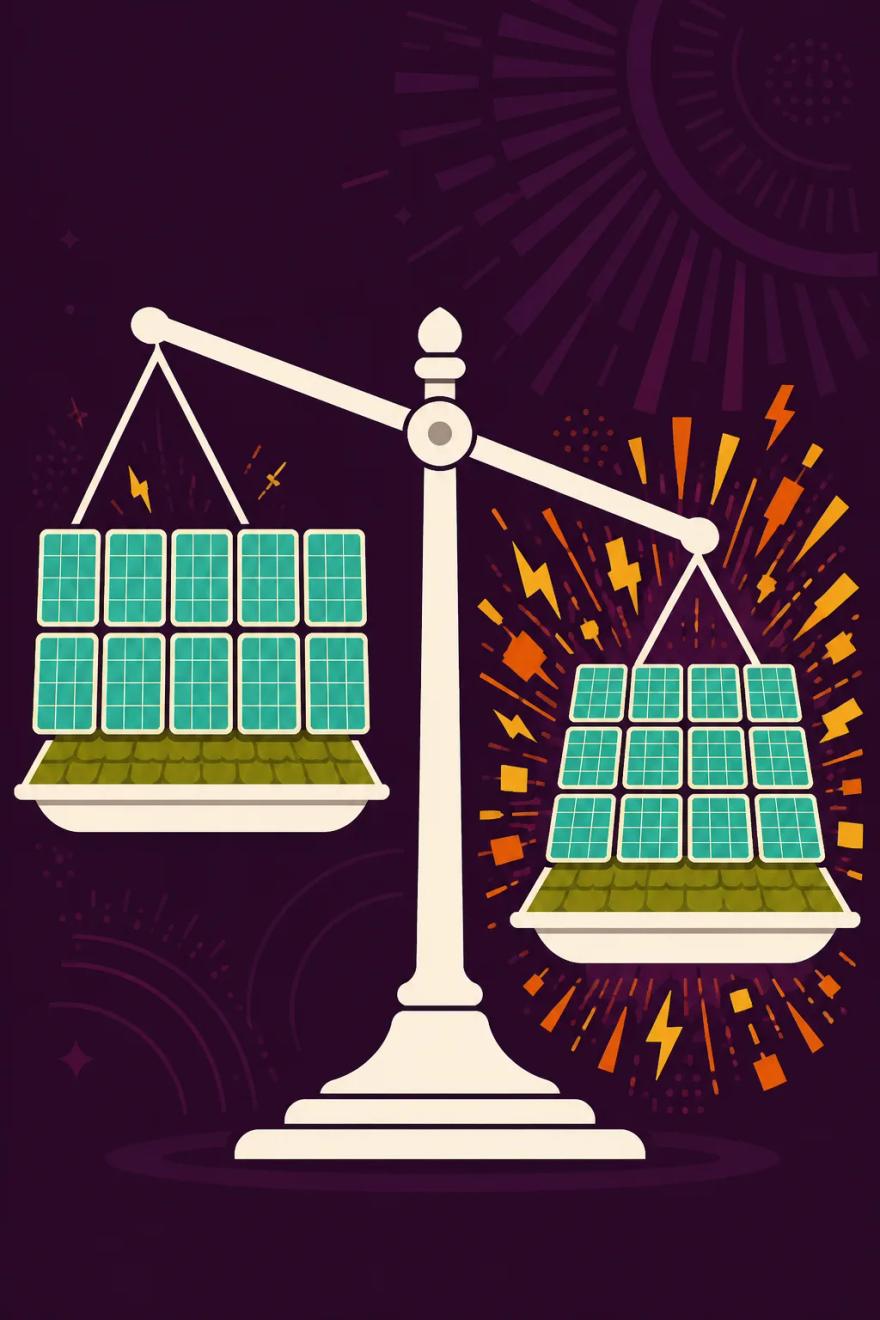
A higher-wattage panel is usually a bigger panel, with more cells and more surface area. That's an advantage if you have wide open roof space. But if your usable roof area is limited, a lower-wattage panel that's smaller and more efficient can let you fit more panels in the same footprint, and produce more total power as a result.
Ten large high-wattage panels can lose to twelve smaller ones if the twelve add up to more combined watts. Wattage on a spec sheet isn't the finish line — total output for your specific roof is what matters, and shading from trees, chimneys, vents, or a steep roof angle can quietly cut into that output even when the math on paper looks fine.
What Most People Get Wrong About Solar and Outages
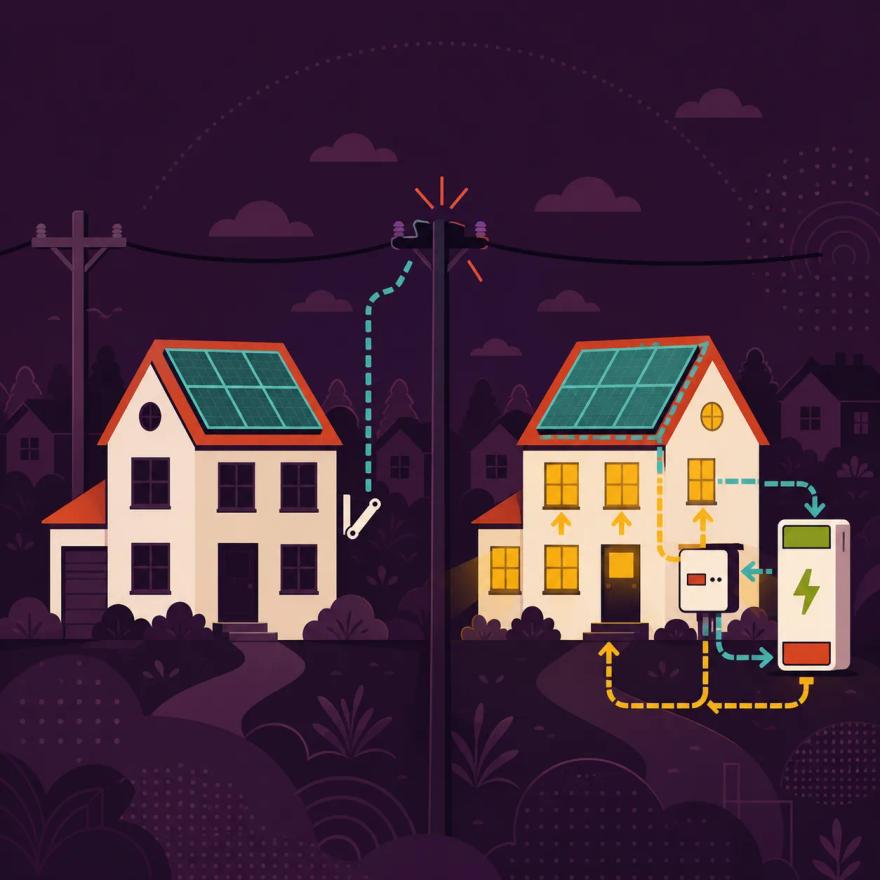
A standard grid-tied solar system does not keep your lights on when the grid goes down. By default, if the utility loses power, your panels shut off too. That's a safety requirement, not a malfunction.
If riding out an outage matters to you, that's a different build from the start: batteries, the specific loads you want to keep running, and an inverter that can operate independently when the grid is gone. A battery-backed system is designed around different priorities than one that simply feeds power back to the grid, so it's a decision worth making up front rather than assuming you already have it because there are panels on the roof.
Why the Same System Can Pencil Out Differently in Two Towns
Net metering — the way your utility credits the power you send back to the grid — varies from one utility to the next. Connection fees and billing structures vary too. The same fifteen panels can pencil out differently in two different towns simply because the local utility rules are different.
Permits, inspections, electrician requirements, and meter swaps also vary by location. A real design accounts for your town, your utility, and your inspector instead of assuming every location plays by the same rules.

Sizing for Where You're Headed, Not Just Where You Are
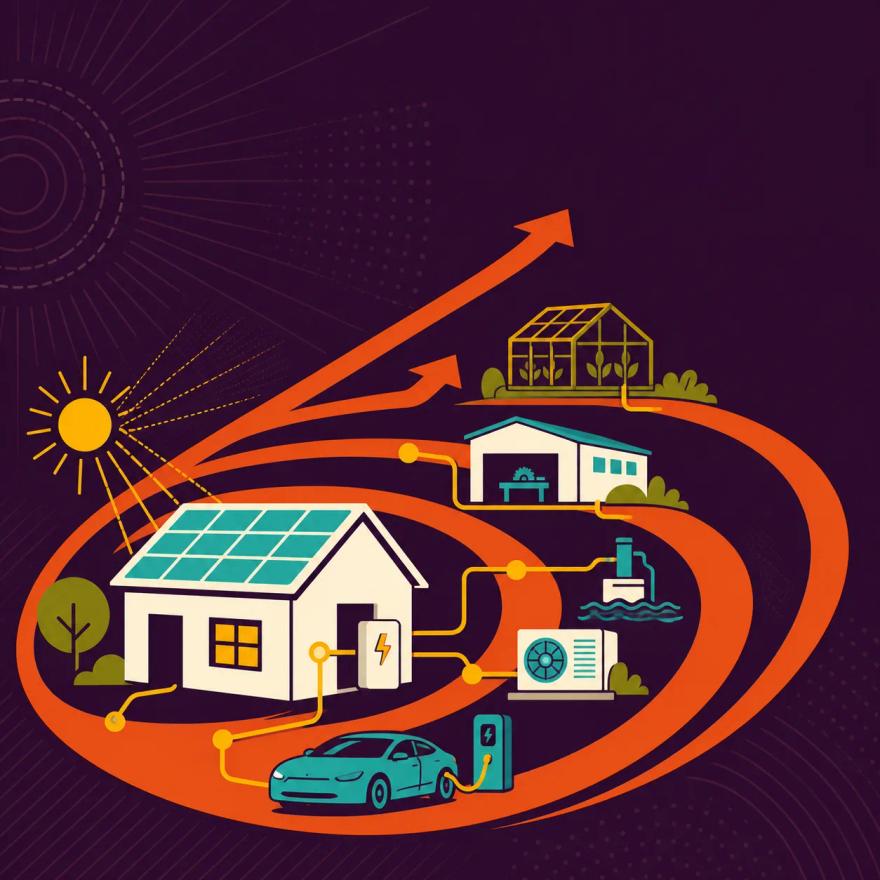
Your usage number today isn't necessarily your usage number in a few years. If you're planning to add an EV, a heat pump, a well pump, a shop, or a greenhouse down the road, sizing a system only for your current bill can mean needing a second install later — and paying for labor and permitting twice instead of once.
Usage, location, panel selection, shading, batteries, future loads, and utility rules are a lot of variables to hold at once, and getting any one of them wrong changes the outcome. That's not a knock on your ability to do the math. It's just that a spreadsheet formula and a buildable system aren't the same thing.
How Unbound Solar Helps
We're not here to sell you a pile of panels and wish you luck. Guided DIY solar means you do the parts you can handle, and you get expert help with the parts that have to be right.
- System designBuilt around your actual loads, not a generic average, so the panel count actually fits your home.
- Permit-ready plansDrawings prepared for your town, so you know what your inspector and utility need to see before you're standing in front of them.
- Equipment that works togetherComponents chosen to function as a system, not assembled piece by piece and hoped into compatibility.
- Guided partial installYou set the racking and panels; a licensed electrician handles the wiring, connection, and final tie-in.
You save on the crew labor you'd otherwise pay for — not by cutting corners, but by taking on the work you can safely do yourself. The design, the plans, the permitting, and the engineering come with the system either way. You stay in control of the project, and you're not left alone to figure out sizing, permitting, and utility approval from nothing but a bill and a calculator you found online.
Start With a Solar Estimate
Questions people actually ask
Straight answers, sourced from real searches.
There isn't a single average that applies to every home, because usage varies too much from house to house. The reliable way to find your number is to divide your daily electricity usage (from your bill) by your local peak sun hours, then divide that system size by your chosen panel's wattage. Two homes of the same size can need very different panel counts depending on appliances, heating and cooling, and daily habits.
Square footage isn't the best starting point. A home's electricity usage depends more on appliances, insulation, heating and cooling type, and household habits than on floor area. Two homes of the same size can have very different electric bills. Start from your actual kWh usage instead, since that's what your system needs to be sized around.
Not by default. A standard grid-tied system shuts off when the grid goes down, which is a safety requirement rather than a malfunction. Keeping power on during an outage requires a different build from the start, including batteries, a defined set of critical loads, and an inverter that can run independently of the grid.
It depends on your roof, not just the spec sheet. Higher-wattage panels are usually physically larger, which is an advantage with open roof space. If your usable roof area is limited, smaller, more efficient panels can sometimes fit more total wattage in the same footprint. Total output for your specific roof matters more than the wattage number on any single panel.
Because they're built on different assumptions about usage, location, and panel wattage, not because any one of them is wrong. A calculator using a national average usage figure and a generic sun-hour estimate will land on a different number than one built around your actual bill and your actual location. The more specific the inputs, the more accurate the output.
Consider both. If you're planning to add an EV, a heat pump, a well pump, a shop, or a greenhouse in the next few years, sizing only for today's bill can mean needing a second install later. That means paying for labor and permitting twice instead of once, so it's worth accounting for planned additions upfront.
Net metering affects what a given system is worth to you more than how many panels you need to hit a usage target. Net metering rules, credit rates, and connection fees vary by utility, so the same panel count can pencil out differently depending on where you live. It's worth understanding your local utility's rules before finalizing a system size.
Treat it as a starting floor, not a final answer. The quick calculation (usage ÷ peak sun hours ÷ panel wattage) is a clean estimate, but it doesn't account for real-world losses from heat, wiring, and imperfect sun exposure. A real design, built around your actual roof, typically lands somewhat higher than the napkin-math number.