Solar financing
Paying for Solar: How Cash, Loans, Leases, and HELOCs Really Compare
The real question in solar financing is not which option has the lowest monthly payment. It is which option gives you the lowest total cost and, ideally, outright ownership of the system.
Watch: How a HELOC works, and why homeowners use one to finance solar
A plain-English breakdown of how a home equity line of credit works and why homeowners use one to pay for solar. It covers the fees hidden inside many solar loans, the escalators buried in leases, and why using equity you already own can be a cheaper, more flexible way to own your system outright.
The Question That Actually Matters
The lowest monthly payment is not the same thing as the lowest total cost. A payment that looks easy on paper can carry fees, rising costs, or a system you never actually own.
Every solar financing option, cash, a solar loan, a lease or PPA, and a home equity line of credit (HELOC), trades payment size against total cost and ownership differently. Comparing them side by side, instead of shopping for the smallest monthly number, is what keeps a homeowner from signing up for the option that costs more in the long run.
Not sure what your system would even cost?See a real number for your home before you compare how to pay for it.Get My Solar Estimate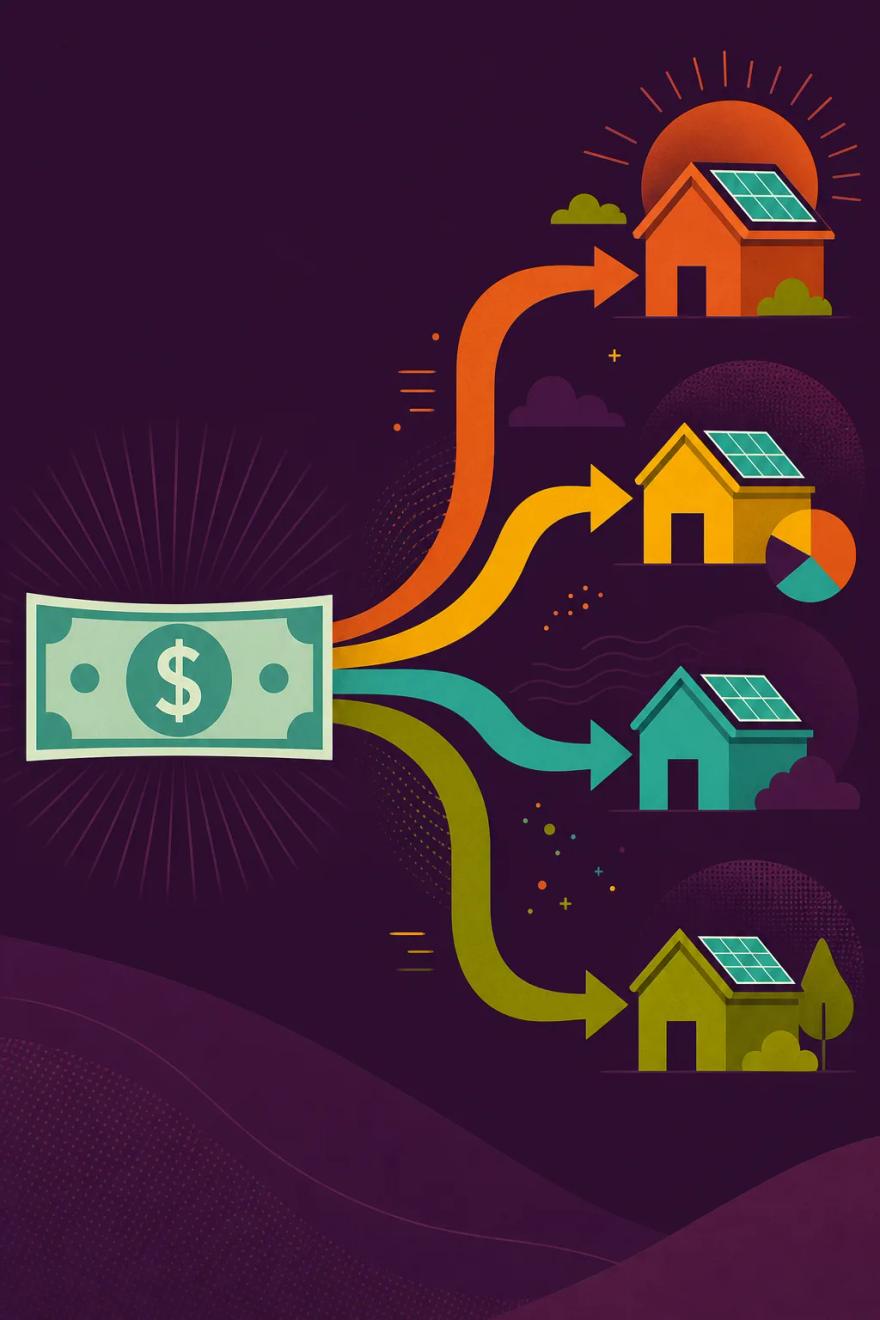
Your Four Ways to Pay for Solar
Homeowners financing solar are generally choosing between paying cash, taking out a solar loan, signing a lease or power purchase agreement (PPA), or borrowing against home equity through a HELOC. Each one changes who owns the system and how much the project costs over time.
| Cash | Solar Loan | Lease / PPA | HELOC | |
|---|---|---|---|---|
| Who owns the system | You | You | The leasing company | You |
| Upfront cost | Full price | None | None | None |
| Ongoing cost | None | Fixed loan payment | Payment that can rise each year | Interest on what you draw |
| Common hidden cost | None | Origination or dealer fee rolled into the loan | Annual escalator on the payment | Home used as collateral |
Paying cash avoids financing costs entirely, which is why it is generally the least expensive way to pay for solar when a homeowner has the cash available. Most homeowners are financing some portion of the project instead, which is where the differences between a solar loan, a lease, and a HELOC start to matter.
What Solar Loans Don't Tell You Upfront
A solar loan often finances more than the price of the system itself, because origination and dealer fees are frequently rolled into the loan amount. That means the number you are paying interest on is not the same as the price of your solar system.
In that kind of example, a homeowner pays interest on the full financed amount, fees included, not on the equipment and installation alone. Solar loans also tend to run for long terms, and paying one off early can still cost thousands more than expected in interest and fees along the way. Most solar loans also file a lien against the home, similar to a HELOC.
Why Lease and PPA Payments Don't Stay Flat
A solar lease or PPA usually includes an annual escalator, meaning the payment increases every year rather than staying the same. Over time, that rising payment can end up higher than the utility bill it was meant to replace.
With a lease or PPA, the homeowner also never owns the solar system, which can complicate selling the home later since the new owner has to agree to take over the agreement. A lease or PPA can lower the barrier to going solar with no upfront cost, but it trades ownership and a flat payment for a company-owned system and a rising bill.
Comparing a lease quote against owning the system outright?Get a real cost estimate for a system you would own from day one.Get My Solar Estimate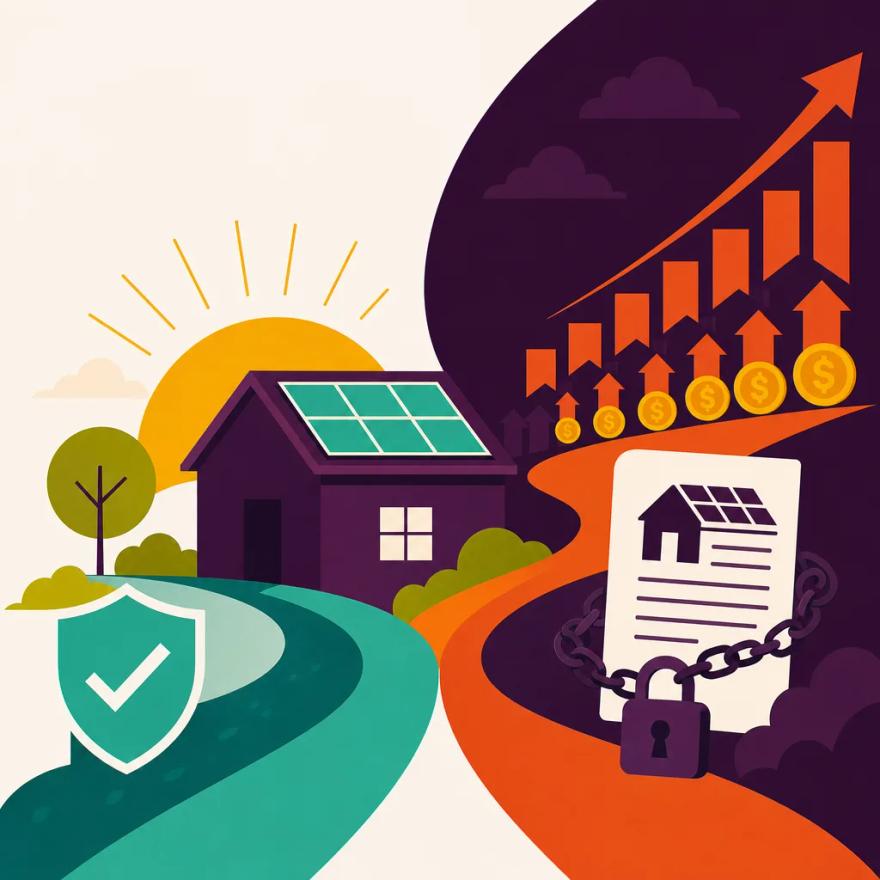
What a HELOC Actually Is
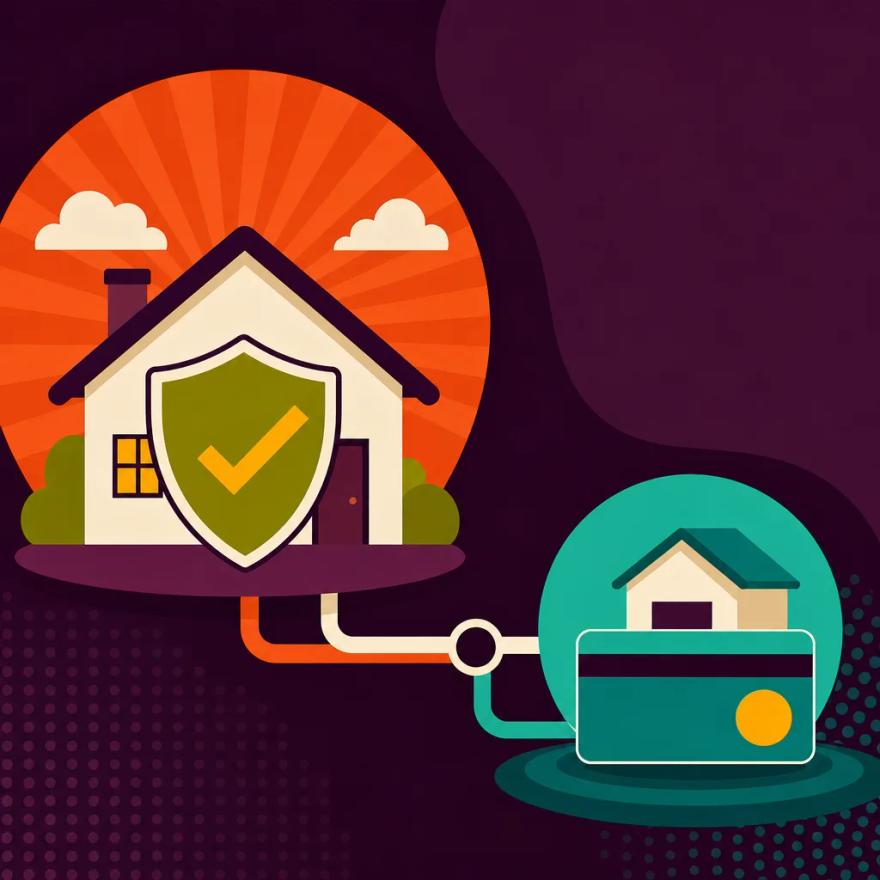
A HELOC, or home equity line of credit, is a line of credit secured by your home that lets you borrow against equity you've already built. It works more like a credit card than a traditional loan, drawing money as you need it instead of receiving it all at once.
Home equity is the portion of your home you actually own, the difference between what the home is worth and what is still owed on the mortgage. That equity is value you've already built over time, it's just sitting in the property instead of in a bank account. A HELOC is a way to put some of that value to work, including for a solar project, and then pay it back over time.
With a HELOC, you are approved for a credit limit, but you only pay interest on the amount you actually draw. As the balance is paid down, that portion of the credit line opens back up, so it can be used again later, for example to add a battery or an EV charger down the road.

Does a HELOC Change Your Mortgage Rate?
No, a HELOC does not change or reset the interest rate on your primary mortgage. That original loan stays exactly as it is.
This is one of the most common misconceptions homeowners have about HELOCs. Many homeowners locked in a strong first mortgage rate years ago, often in the 2.5% to 3.5% range, and worry that opening a HELOC will somehow cause that original mortgage to reset to today's rates. A HELOC is a separate line of credit tied to the home, layered alongside the mortgage, not a change to the mortgage itself.
How Borrowing Against Your Equity Works
A HELOC typically lets a homeowner borrow up to about 80% to 85% of their home equity, with the exact amount set by the lender at underwriting. Qualifying for a HELOC depends on how much equity is in the home along with the borrower's credit score, income, and existing debts.
Because a HELOC works like a credit card, a homeowner can draw only what the solar project actually costs, pay interest only on that amount, and hold the rest of the credit line in reserve. That reserve can later be used for other home projects, debt consolidation, or additional solar equipment like storage, without applying for a new loan each time.
Is a HELOC Right for Your Solar Project?
Using a HELOC to pay for solar is an ownership play rather than a payment play. Instead of continuing to send a rising utility bill to the utility company and owning nothing for it, that same money goes toward paying down a line of credit secured by an asset the homeowner controls.
A HELOC is a serious option worth comparing for many homeowners, but it is not automatically the right fit for every project or every homeowner.
| Worth a serious look if… | May not be the right fit if… |
|---|---|
| You have meaningful equity built up in your home | You have little or no home equity available |
| You want to own the solar system outright | You want no upfront responsibility for financing at all |
| You're comfortable using your home as collateral | You're not comfortable securing debt against your home |
| You want a reusable credit line for future upgrades | You need a fixed payment with no variability |
A HELOC typically carries a variable rate and is secured by the home, so the tradeoffs are different from a fixed-payment solar loan. Comparing actual offers, not just the concept, is what tells a homeowner which one fits their situation.
Questions to Ask Before You Borrow
A homeowner comparing financing should be able to answer a few questions honestly before choosing a path, and should ask the same set of questions to every lender.
- Am I trying to minimize total cost, or minimize the monthly payment?
- Do I want flexibility to borrow again later for a battery, EV charger, or other upgrade?
- Am I comfortable using my home as collateral for this project?
- What is the rate, and is it fixed or variable?
- What are the closing costs and any annual fees?
- Is there a prepayment penalty?
- How long is the draw period before repayment begins?
Shopping more than one lender matters here. Local credit unions in particular often offer lower rates and fees, along with more personal underwriting, than a larger bank.
A note on advice: Unbound Solar is not a financial or tax advisor. Any tax benefit depends on how loan funds are used and on personal circumstances, and should be confirmed with a professional. A HELOC is secured by your home, and the exact rate, credit limit, and terms depend on your lender, your qualifications, and market conditions at the time of underwriting.
How Unbound Solar Helps
Choosing how to pay for solar is only part of the project. The system still has to be designed around your actual home, and Unbound Solar helps with that part regardless of which financing path you choose.
We can help with:
- Designing a solar system sized around your actual usage and roof
- Permit-ready plans for your jurisdiction
- Utility interconnection support
- Guidance on what work you can do yourself and where a licensed electrician is required
Start With a Solar Estimate
See Your Cost First, Then Decide How to Pay for It
Financing decisions are easier once you know what the system actually costs. Enter your location, electric usage, and project goals, and the Solar Estimator gives you a starting number based on your home, not a generic average, so you can compare that figure against a cash payment, a loan quote, a lease offer, or a HELOC.
Ready to see what your system would actually cost?Get a number based on your home before you compare financing.Get My Solar EstimateQuestions people actually ask
Straight answers, sourced from real searches.
No. A HELOC does not change or reset the rate on your primary mortgage. That loan stays exactly as it is. A HELOC is a separate line of credit secured by your home equity, layered alongside your existing mortgage rather than replacing or altering it.
Most lenders let you borrow up to about 80% to 85% of your home equity, though the exact amount depends on the lender's underwriting. Qualification also depends on your credit score, income, and existing debts, along with how much equity you have built in the home.
Only on what you actually draw. A HELOC works like a credit card: you're approved for a credit limit, but interest applies to the amount borrowed, not the full limit. As you repay the balance, that portion of the credit line becomes available again.
Yes. A HELOC can be used for home improvements, solar, debt consolidation, or other major expenses, since it's a general line of credit rather than a loan tied to one purpose. Any unused portion stays available to draw on later for other projects.
No. With a lease or PPA, the leasing company owns the system, and payments typically include an annual escalator that raises the cost every year. Over time that rising payment can exceed what the utility bill would have been, and it can also complicate selling the home later.
It can be more straightforward to apply for, but a solar loan often finances more than the system's sticker price. Origination and dealer fees are frequently rolled into the loan amount, so a homeowner ends up paying interest on fees as well as equipment, not just on the system itself.
Generally yes. Paying cash avoids financing costs altogether, interest, origination fees, and escalating payments included, which is why it's typically the lowest total-cost option for homeowners who have the cash available for the full project.